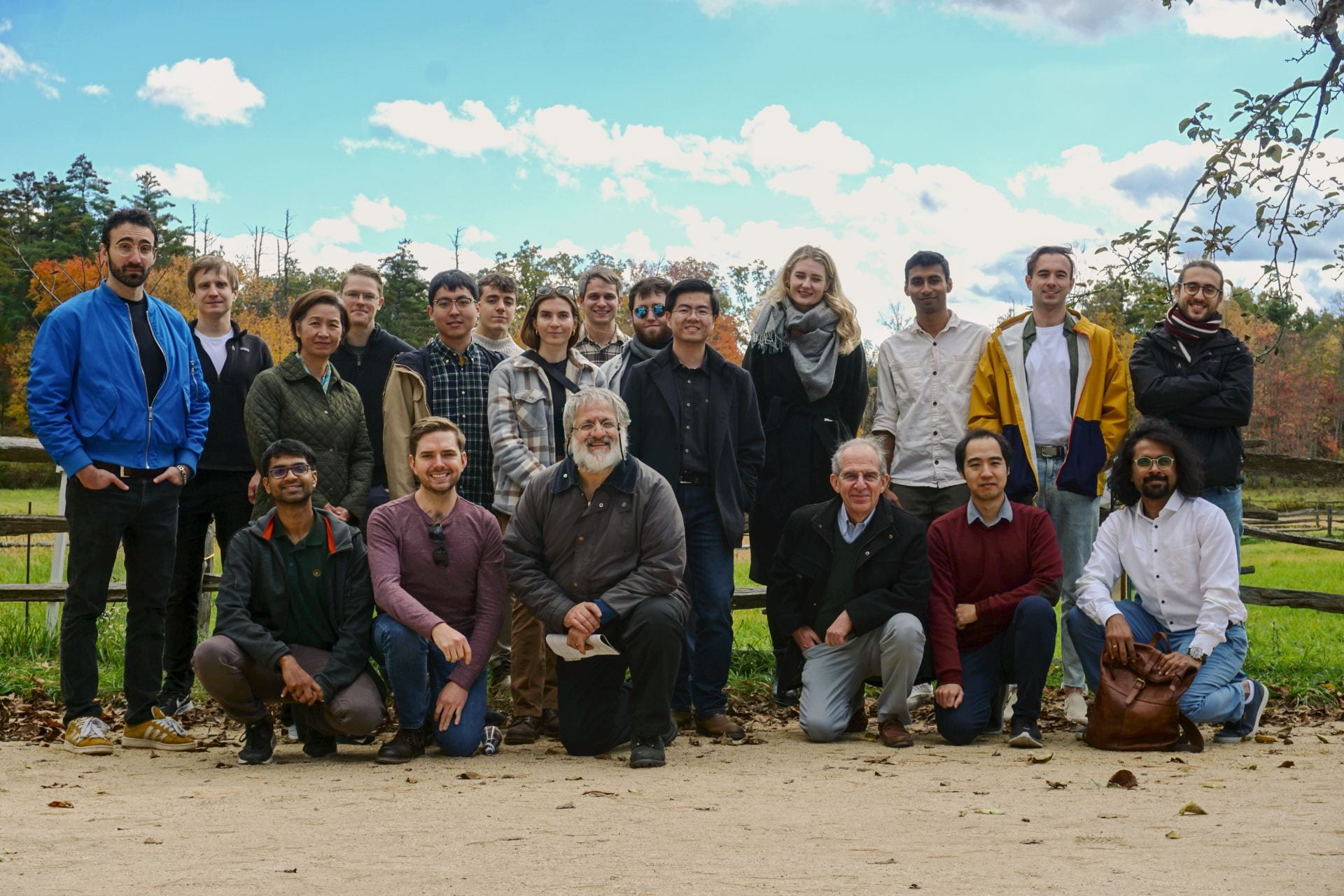
Qulab 2023
Top left – Bottom right: Rodrigo Cortiñas, Pavel Kurilovich, Nuch Graves, Tom Connolly, Heekun Nho, Alejandro Cros Carillo de Albornoz, Cassady Smith, Spencer Diamond, Benjamin Brock, Andy Ding, Charlotte Bøttcher, Akshay Koottandavida, Vlad Sivak, Alessandro Miano, Vidul Joshi, Alec Eickbusch, Luigi Frunzio, Michel H. Devoret, Wei Dai, Sumeru Hazra
Principal Investigator
Permanent Staff
Luigi Frunzio, senior research scientist
Theresa Evangeliste, administrative assistant
Nuch Graves, program manager
Associate Research Scientists
Graduate students
Alumni
Baleegh Abdo (postdoc); Nicolas Bergeal (postdoc); Etienne Boaknin (postdoc); Charlotte Bøttcher (postdoc); Markus Brink (postdoc); Benjamin Brock (postdoc); Philippe Campagne-Ibarcq (postdoc); Rodrigo Cortiñas (postdoc);Wei Dai (student); Spencer Diamond (student); Andy Ding (student); Alec Eickbusch (student); Simon Fisette (undergrad); Nick Frattini (student); Alvin Gao (undergrad); Kurtis Geerlings (student); Alexander Grimm (postdoc); Sumeru Hazra (postdoc); Michael Hatridge (postdoc); Max Hays (student); Benjamin Huard (visiting scientist); Vidul Joshi (student); Archana Kamal (student); Philippe Hyafil (postdoc); Akshay Koottandavida (student);Angela Kou (postdoc); Pavel Kurilovich (student);Gijs de Lange (postdoc); Zaki Leghtas (postdoc); Andrew Lingenfelter (undergrad); Yehan Liu (student); Vladimir Manucharyan (student); Adam Marblestone (undergrad); Nick Masluk (student); Zlatko Minev (student); Shantanu Mundhada (student); Anirudh Narla (student); Heekun Nho (student); Chris Pang (undergrad); Frederic Pierre (postdoc); Ioan Pop (postdoc); Chad Rigetti (student); Flavius Schackert (student); Kyle Serniak (student); Irfan Siddiqi (postdoc); Volodymyr Sivak (student); Katrina Sliwa (student); Clarke Smith (student); Cassady Smith (student) ;Steven Touzard (student); Ioannis Tsioutsios (postdoc); Gautham Umasankar (student) ;Jayameenakshi Venkatraman (student); Rajamani Vijayaraghavan (student); Uri Vool (student); Zhixin Wang (student); Chris Wilson (postdoc); Xu Xiao (student); Evan Zalys-Geller (student); William Zeng (undergrad);
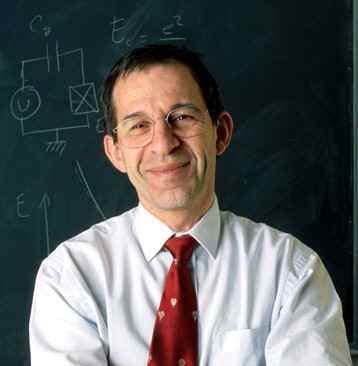 Michel H. Devoret
Michel Devoret graduated from Ecole Nationale Superieure des Telecommunications in Paris in 1975 and started graduate work in molecular quantum physics at the University of Orsay. He then joined Professor Anatole Abragam’s laboratory in the Commissariat a l’Energie Atomique (CEA) at Saclay to work on nuclear magnetic resonance in solid hydrogen, and received his PhD from Paris University in 1982. Subsequently, he spent two post-doctoral years working under Prof. John Clarke’s guidance at the University of California, Berkeley, with John Martinis, who was a PhD student at that time. In a series of experiments, the trio showed that a Josephson tunnel junction could, under a controlled microwave environment, behave as an artificial atom “with wires”, the basis of what is now known as a superconducting quantum bit. Michel Devoret pursued this research on quantum mechanical electronics upon his return to Saclay, starting his own group with Daniel Esteve and Cristian Urbina. The main achievements of the “quantronics group” in this period of his career were the measurement of the traversal time of tunneling, the invention of the single electron pump, the first measurement of the effect of atomic valence on the conductance of a single atom, and the first observation of the Ramsey fringes of a superconducting artificial atom named quantronium. He was promoted director of research at CEA-Saclay in 1995 and in 2002 he joined Yale University as a full professor. In 2007, Michel was appointed to the College de France. He gave there every year new cycles of lectures on quantum mesoscopic physics until 2012.
Currently the F. W. Beinecke Professor of Applied Physics at Yale University – where he has taught and led a research group for the last 20 years – he focuses his research on experimental solid-state physics with emphasis on quantum information processing. In the new type of electronics his lab develops, not only electrical collective degrees of freedom like currents and voltages behave quantum mechanically, but single microwave photons can be made to interact controllably with artificial atoms. Such mesoscopic processes are particularly important in quantum circuits based on Josephson tunnel junctions combined with superconducting resonators, which are now viewed as one of the main platforms for the implementation of quantum information processors. Michel has contributed, in collaboration with his Yale colleagues Rob Schoelkopf, Leonid Glazman and Steven Girvin, to the invention of two new artificial superconducting atoms, the transmon and the fluxonium. Also, after having developed new types of amplifiers reaching the quantum limit, he employed them to determine the fundamental back-action of measurements. In particular, Michel’s team showed that it was possible to stop a quantum jump in its flight and reverse it. He currently investigates the new phenomena of quantum error correction and fault-tolerant quantum operation. With his team he recently realized the full quantum error correction of a superconducting qubit.
Michel Devoret is a member of the American Academy of Arts and Sciences (2003) and a member of the French Academy of Sciences (2008). Michel has received the Ampere Prize of the French Academy of Science (together with Daniel Esteve, 1991), the Descartes-Huygens Prize of the Royal Academy of Science of the Netherlands (1996) and the Europhysics-Agilent Prize of the European Physical Society (together with Daniel Esteve, Hans Mooij and Yasunobu Nakamura, 2004). He is also a recipient of the John Stewart Bell Prize, which he received jointly with Rob Schoelkopf in 2013. In 2014, together with John Martinis and Rob Schoelkopf, he was awarded, the Fritz London Memorial Prize. He received the Olli Lounaasma Prize in 2016.
Michel Devoret has won the 2025 Nobel Prize in Physics for his groundbreaking work in quantum computing.
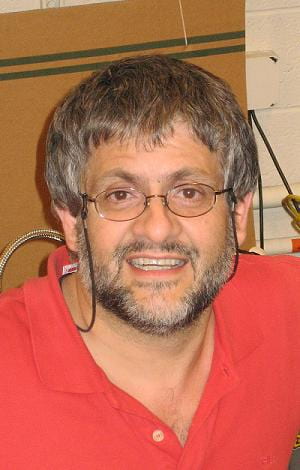 Luigi Frunzio
phone : 203-432-4273
Luigi received his Masters in Physics at Federico II University in Naples, Italy, earning 110/110 Cum Laude. His thesis studied the effects of the intrinsic fluctuations in current biased Josephson tunnel junctions, and his preliminary work took place at the Superconductivity Department of the Instituto di Cibernetica of the CNR under the supervision of Professors Arturo Tagliacozzo and Roberto Cristiano. He also has a PhD from Orsay University. Luigi is currently a Senior Research Scientist at the Department of Applied Physics at Yale University. He works jointly with Prof. Devoret and Prof. Schoelkopf on experiments involving superconducting qubits. His curriculum vitae is available here
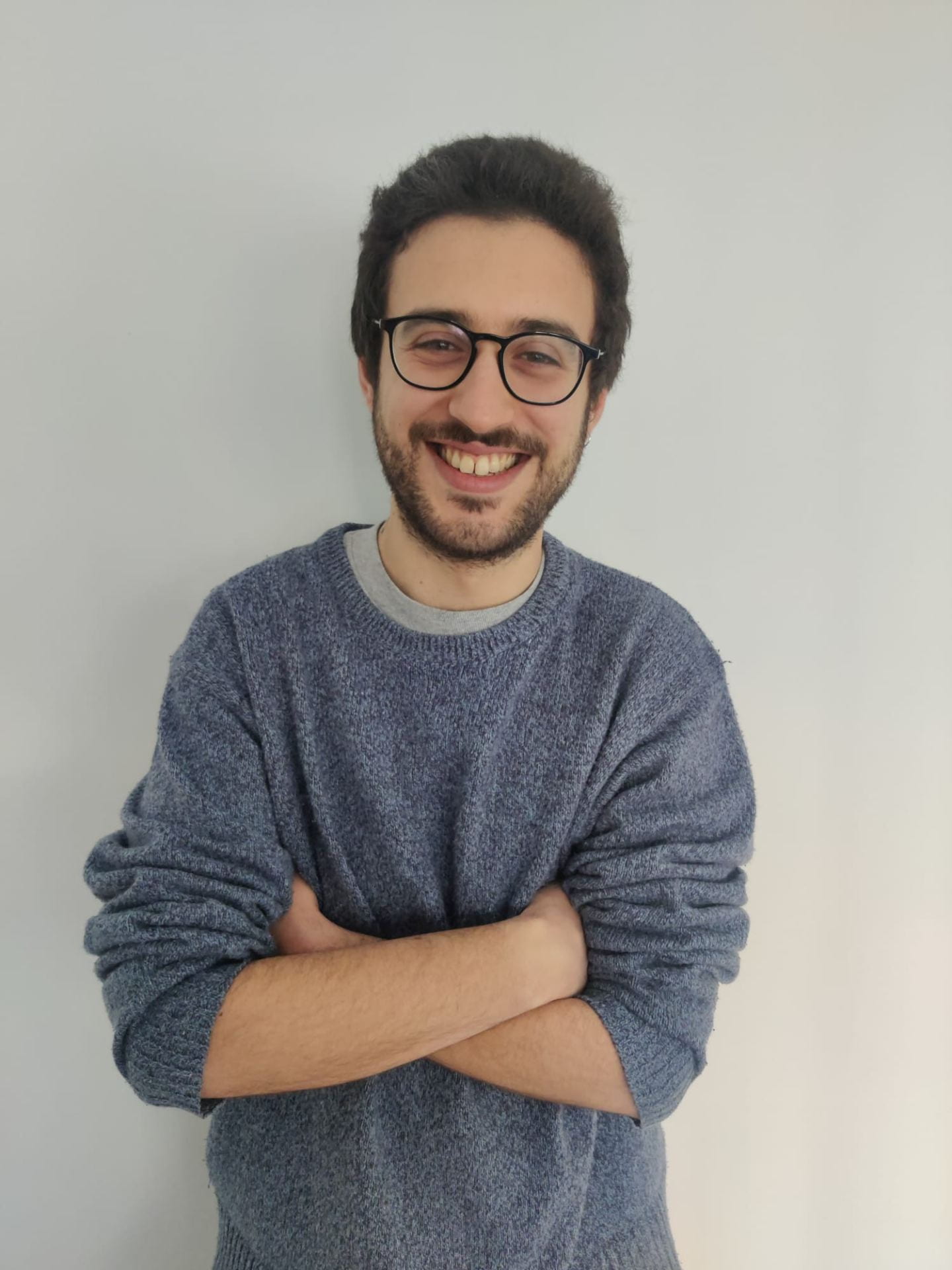 Alessandro Miano
Alessandro (Sandro) Miano was born in Naples, Italy. He received his BSc and MSc in Electronics Engineering and his PhD in Experimental Physics from University of Naples “Federico II”. Alessandro spent the last year of his PhD as a Visiting Assistant in Research in Qulab, which he joined as a Postdoctoral Associate in 2021.
Since 2024 he is an Associate Research Scientist. His research is focused on developing and experimentally validating new models for designing weakly-anharmonic superconducting quantum circuits for various applications, including the implementation of high-order wave mixing elements and the investigation of barrier losses of Josephson junctions.
 Tom Connolly
Tom earned a B.S. in Physics and a B.S. in Mathematics from the University of Massachusetts, Amherst, where he investigated non-reciprocal superconducting circuits with Prof. Chen Wang. In 2019, he joined Qulab as a graduate student and has since worked on superconductor-semiconductor hybrid devices, quasiparticle-induced decoherence, measurement of superconducting qubits, and the undesired effects of strong drives on nonlinear circuits.
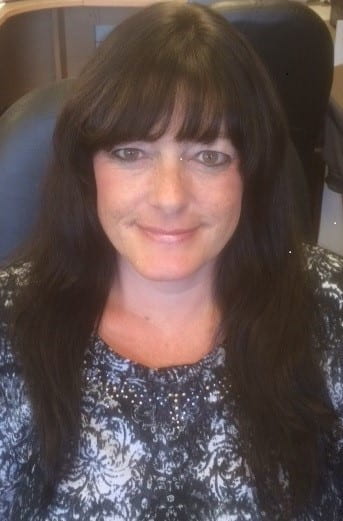 Theresa Evangeliste
Senior Administrative Assistant
Yale University, Applied Physics
15 Prospect Street / PO Box 208284
Becton Center 401
New Haven, CT 06520-8284
phone : 203-432-2210
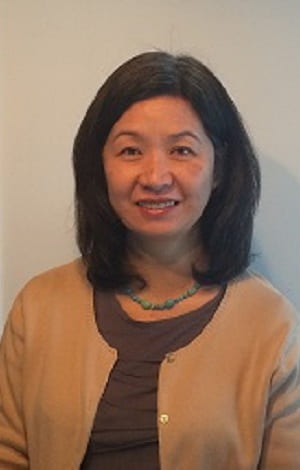 Nuch Graves
Research Program Manager
Yale University, Applied Physics
15 Prospect Street / PO Box 208284
Becton Center
New Haven, CT 06520-8284